The occursus model© for Business Events
This model helps destinations, cities, municipalities, regions, congress centres and conference venues to differentiate themselves in the market, remain capable of action under budget and margin pressure, and use business events strategically.
At occursus, business events are not understood as mere tools for occupancy, but as a strategic lever for year-round tourism, positioning and regional value creation. The aim is to connect places and topics in a way that creates meaningful encounters with real added value.
My purpose is to develop destinations and venues through impactful business events in an economically, socially and environmentally sustainable way.

01
Analysis and Contextual Assessment
Analysis of the destination or venue within its market environment, including seasonality, utilisation, competition and existing offer structures, as well as consideration of political, economic and organisational framework conditions.
02
Positioning of Destination/Venue and Themes
Clarification of the role of the Destination/Venue within the business events market, definition of relevant thematic fields with economic and societal relevance, and alignment between spatial potential, organisational mindset and content ambition.
03
Building a network
Development and activation of networks across business, academia and politics, involvement of regional and supra-regional stakeholders, and connection of local strengths with external perspectives.
03
Formats for Dialogue and Encounter
Design of business event formats with clear added value, development of dialogue, exchange and decision-making formats, and deliberate alignment with target groups and themes.
05
Structuring and Implementation
Definition of clear processes, roles and responsibilities, translation of strategy into implementable offers, and integration into the operational reality of destinations and venues.
06
Controlling and Learning
Definition of relevant KPIs related to utilisation, value creation and impact, analysis of thematic resonance and network effects, and continuous reflection and development as a learning system.


Business Events Strategy for Conference Centres, Meeting Venues and Destinations
Business events are far more than a tool for filling event spaces in the short term. When used strategically, they can become a powerful lever to position places, generate value creation and activate networks.
With my agency occursus I support destinations, cities, conference centres and meeting venues in integrating business events into their long-term strategic development. The goal is not to maximise the number of events, but to curate formats that fit the identity of a place and create lasting impact.
In an increasingly competitive market many organisations face the same key question:
How can business events contribute to a clear positioning, sustainable occupancy and long-term value for the local economy and society?
As a consultant for conference centres, convention centres and meeting venues I support organisations in answering these questions and developing a robust business events strategy.
Consulting for Conference Centres and Event Venues
Many conference centres and meeting venues are facing similar challenges today:
-
increasing competition in the global meetings industry
-
unclear positioning in the business events market
-
seasonal fluctuations in demand
-
increasing pressure on budgets and resources
A successful strategy for conference venues always begins with a clear understanding of the current situation: market environment, target groups, competitive landscape and the unique strengths of the location.
Together we analyse:
-
the strategic role of business events for the location
-
the existing offer structure and sales logic
-
positioning in the national and international events market
-
potential for new event formats
Based on this analysis we develop a clear strategic direction.
How Meeting Venues Can Strengthen Their Market Position
Many venues try to attract as many different event formats as possible. This often leads to a lack of a clear market identity.
Successful meeting venues take a different approach: they define what themes, industries or audiences they want to stand for.
A strong positioning can emerge through:
-
thematic focus such as technology, sustainability or health
-
distinctive architectural or spatial qualities
-
strong regional economic clusters
-
partnerships with universities, companies or networks
In this way business events become a tool for place development rather than simply an operational business segment.
Increasing occupancy through Strategic Business Events
Many conference centres focus on short-term bookings to increase occupancy. Sustainable success usually comes from strategically developed event formats and long-term partnerships.
A clear venue strategy can help to:
-
attract new audiences
-
reduce seasonal fluctuations
-
attract international events
-
foster innovation and knowledge exchange
This approach builds an ecosystem of organisers, companies, institutions and hosts around a venue.
Business Events as a driver for Destinations
For destinations, business events are becoming increasingly important. They can support year-round tourism, attract talent and create economic impulses for a region.
Together with destinations we analyse:
-
which themes and industries fit the location
-
which networks can be activated
-
which event formats create long-term value
The goal is a business events strategy that strengthens both the economy and the identity of a destination.
The data:room as a Space for Developing New Formats
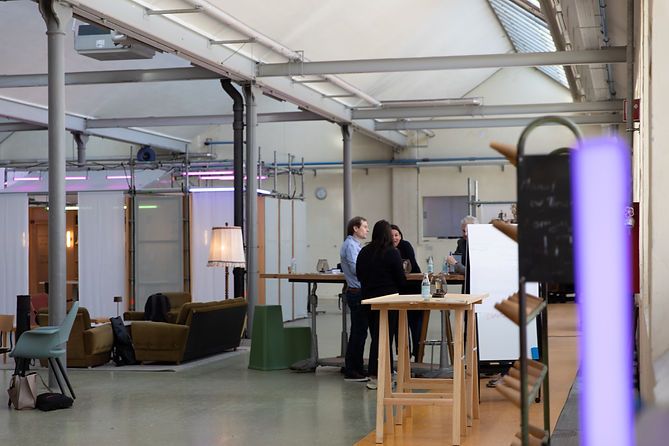
Part of this work takes place in the data:room by occursus, a curated thinking and working space located in the historic Kammgarnfabrik in Hard near Lake Constance. Here strategies are developed, new event formats are tested and decision-making processes are structured. The space is not a traditional event venue but an environment where organisations can rethink their business events strategy.